


Which of the following do you care about?
AI, and the threat it represents to our/our children’s jobs
Animal cruelty (eg factory farming)
Climate change
Crime
Democracy
The Economy (and your ability to make ends meet)
The Environment
Freedom of Speech
Health
Inequality (of income, race, gender, age etc)
Nuclear war
Terrorism
I listed these alphabetically; now could I please ask you to take a moment and rank them in order of importance - to you.
This little exercise should help solve one of the the puzzles of the 2024 US election. Prior to the November vote, a series of polls and studies consistently showed that a significant majority of - especially young - Americans were very concerned about the environment.
A survey of responses from 15,793 individuals aged 16-25 from across the US published in The Lancet Planetary Health, days before the vote, revealed that 85% of respondents said they are at least moderately worried, and 57.9% very or extremely worried, about climate change and its impacts on people and the planet. Over two in five - 42.8% - said climate change was impacting their mental health, while 38.3% said their daily life was negatively affected by it.
Then came the vote.
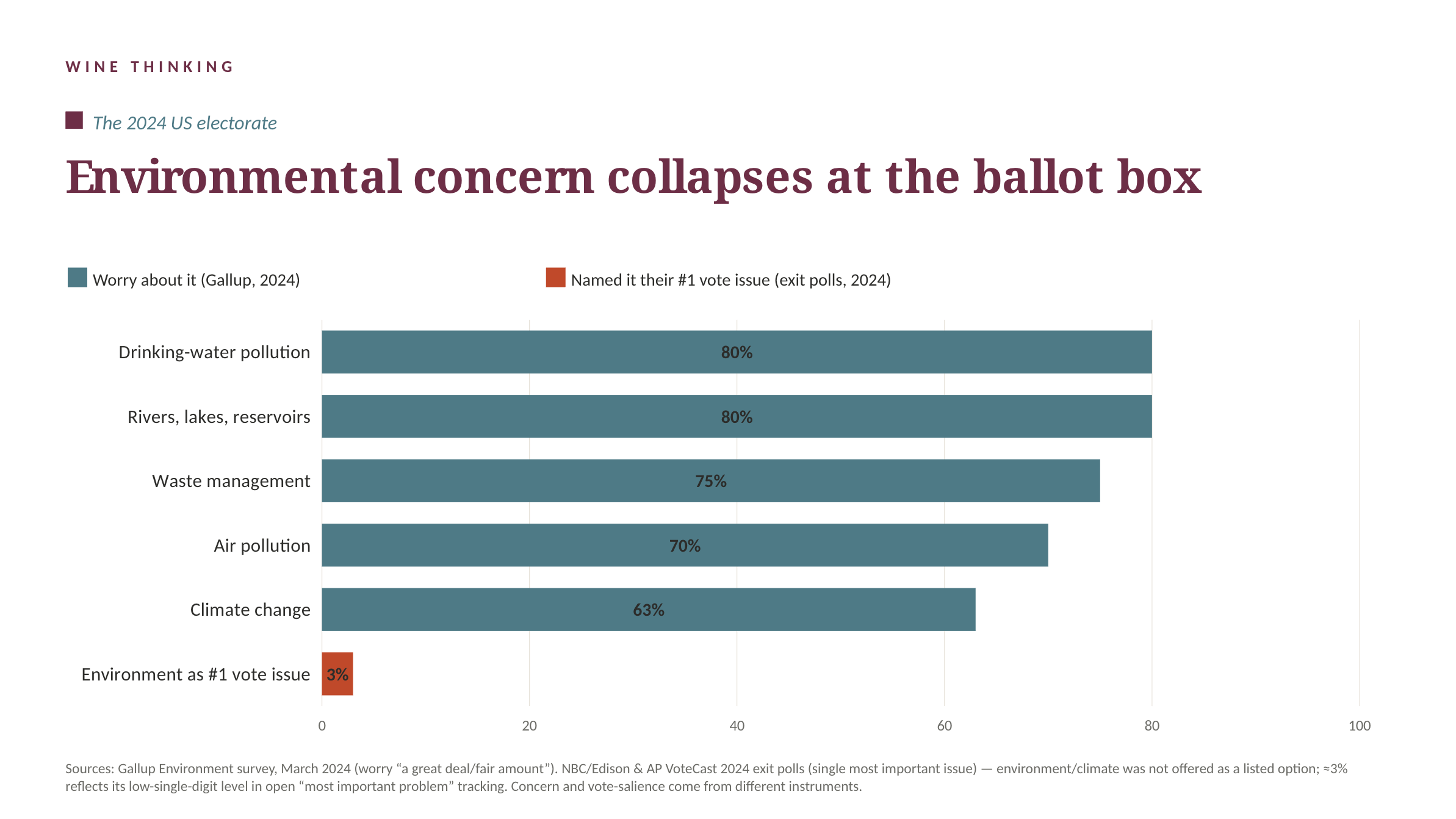
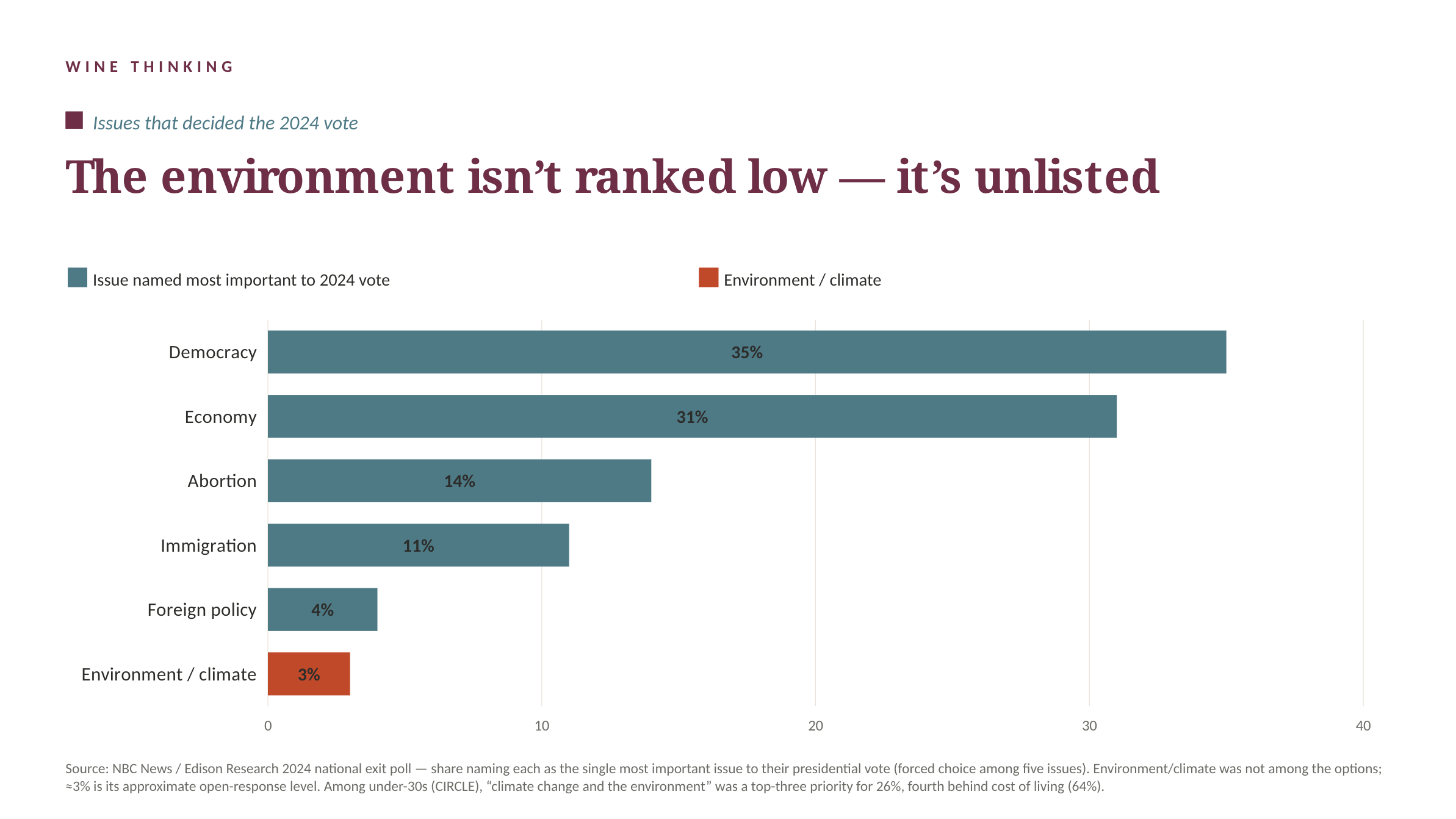
When it came to choosing a President, many of those same young US citizens opted for Donald Trump, the candidate whose favourite lines included “Drill, Baby Drill!” and “Climate Change is a Hoax”. Over half - 56% - of men aged 18–29 voted for Trump and, while the figure for young women was only 40%, that was up from 33% in 2020.
The explanation for this apparent contradiction is ‘salience’ - the way the relative importance of any issue can depend on the situation.
If a researcher with a clipboard asks you if you care about animal cruelty, you’ll say yes. Of course you will. When, however, you’re standing in a supermarket worrying about a pile of bills that need paying and you see a free-range chicken with a price tag that’s over twice as high as the one for a bird raised in a ‘barn’, maybe the strength of your concern about the quality of their respective lives will become a little less urgent.
In the UK, despite an anti-factory farming campaign involving a long list of TV chefs, including Jamie Oliver, only 3.6% of chickens are free-range.
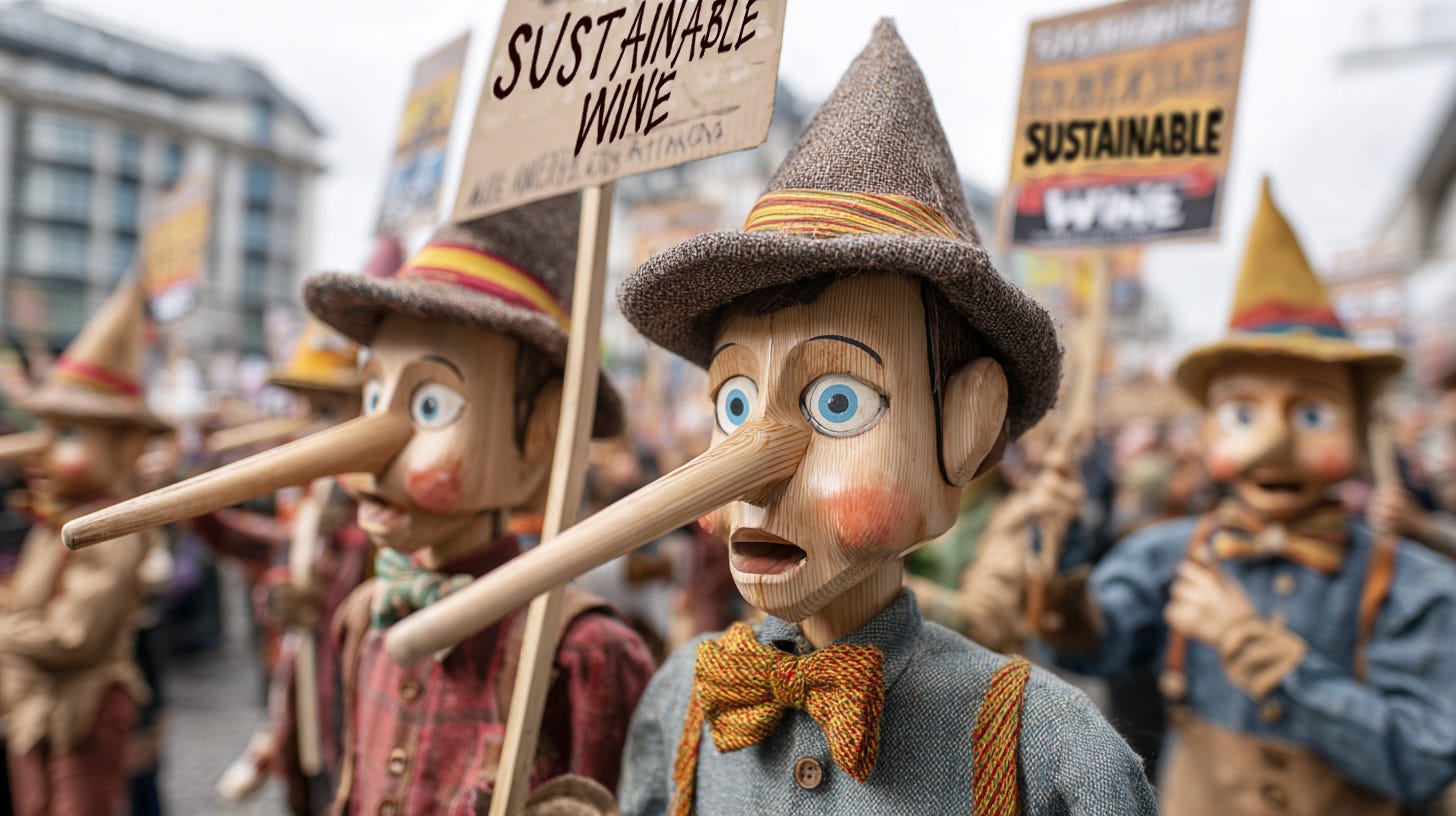
This is relevant when it comes to the mantra that “people want sustainable wine”. Yes, if you ask them, that’s what they’ll say, just as they’d probably say they’d prefer to buy wine made by families who pay human beings a decent wage to pick the grapes by hand, and that they’d really, really like someone to sort out everything that’s happening in the Middle East and Ukraine.
Of course we’ll say we’ll pay more for sustainable wine
According to IWSR, around two-thirds of regular wine drinkers in major markets describe sustainability as ‘important’ to them, rising to 70% in the US and 94% in China. A 2025 meta-analysis in Food Policy / Journal of Agricultural Economics found that, on average, consumers are willing to pay a premium of about 15% for wine with sustainability attributes, higher for certified and especially organic wines.
