

What is Wine? What is Gin?
The bureaucrats of Brussels appear to have come to an agreement over the way no and low alcohol wine can be labeled. Who cares?

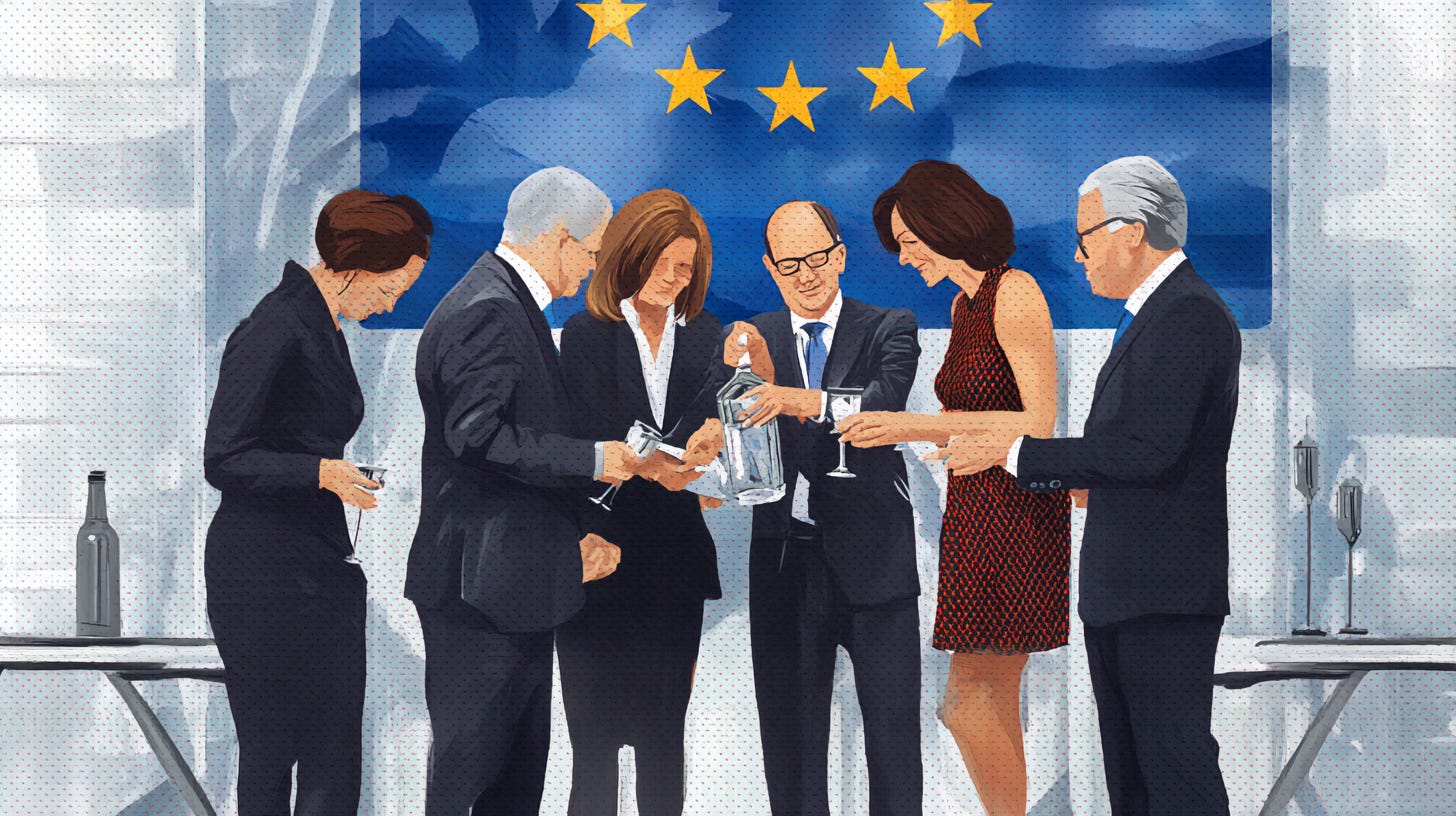
What is the difference between wine and gin - apart from the fact that one is distilled and the other fermented; and the involvement of grapes and botanicals?
I’m only asking this odd question because of two apparently contradictory pieces of news from different sets of European lawmakers. First came the vote, on November 5, by the Agriculture Committee on a piece of legislation called the “Wine Package” that covers new labelling rules. ‘Wine products’ containing less than 0.05% alcohol by volume can, subject to further ratification, now be labelled as “alcohol-free wine” as long as ‘0.0%’ also appears. Wine with an ABV of 0.5% or more, but a strength of “at least 30% lower than the typical strength for its category” would, by contrast, be described as “reduced alcohol wine”.
In other words, provided some explanatory terms are included, removing some or all of its alcohol does not prevent fermented grape juice from being sold as ‘wine’.
Confused gin drinkers
On the other hand, on November 13, following a complaint by the German company. Verband Sozialer Wettbewerb, the European Court decided that ‘alcohol-free gin’ - or Virgin Gin Alkoholfrei to be precise - cannot legally be sold in the EU. To do so, it seems, might lead to consumer confusion. The European man or woman in the street the judges decided, is capable of understanding the words ‘alcohol free’ when they are applied to wine, but not to spirits. Diageo presumably finds this ruling acceptable, as they have chosen not to not use the ‘G’ word on their 0.0% Gordon’s or Tanqueray, trusting their customers to know what they are buying.
But there is another possible area of confusion. Legally, a beverage labelled as ‘wine’ is not supposed to contain anything other than fermented grape juice. But producers making 0.0% dealcoholised ‘wine’ often add flavouring. We make no secret of doing this with our 0.0% Le Grand Noir, and, according to its website, “in order to achieve a harmony of minerality, intensity, depth and freshness”, the makers of the best-selling French Bloom “add natural ingredients like organic lemon to build the flavour profile.”
Under the new rules, are these dealcoholised products be called ‘alcohol-free wines’ or that catchy EU term, ‘dealcoholised aromatised wine’? Is French Bloom to stop referring to its product as ’Sparkling Wine’ on its website? And what of Heineken’s ‘0.0% Pure Lager Beer?
Add to all of this, the highly controversial - and to my mind unlikely - suggestion that 0.0% AOC wines might eventually be allowed, and you have a recipe for the kind of total confusion that will keep Brussels bureaucrats busy for decades.
Meanwhile, serious brands, while complying with the law, will follow Diageo’s lead in doing their own thing. Their marketing people will know that the average shopper and indeed the average journalist, has no idea of - or interest in - the legal category under which their favourite Aperol, Bailey’s, Gordons 0.0% or Zero-Alcohol Mionetto are sold. They only care about how it tastes and what it costs - the kind of details that those bureaucrats find of far less concern.
Who Cares?